

Kargil Vijay Diwas: Remembering the Sacrifice & Victory of 1999
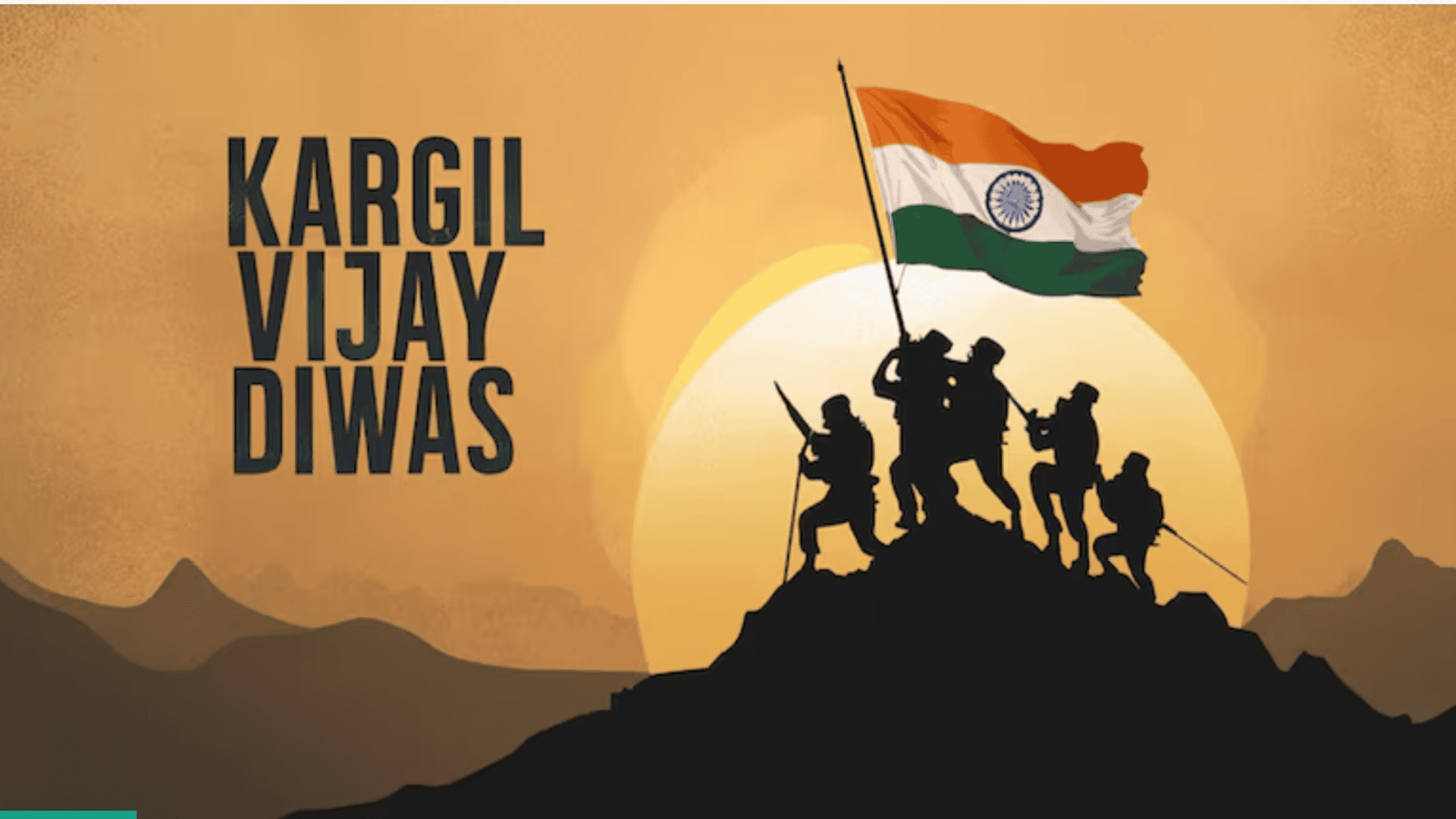

Kargil Vijay Diwas commemorates India's victory in the 1999 Kargil War and pays tribute to the valour of its soldiers. Celebrated every 26 July, it is a powerful reminder of national pride and sacrifice.
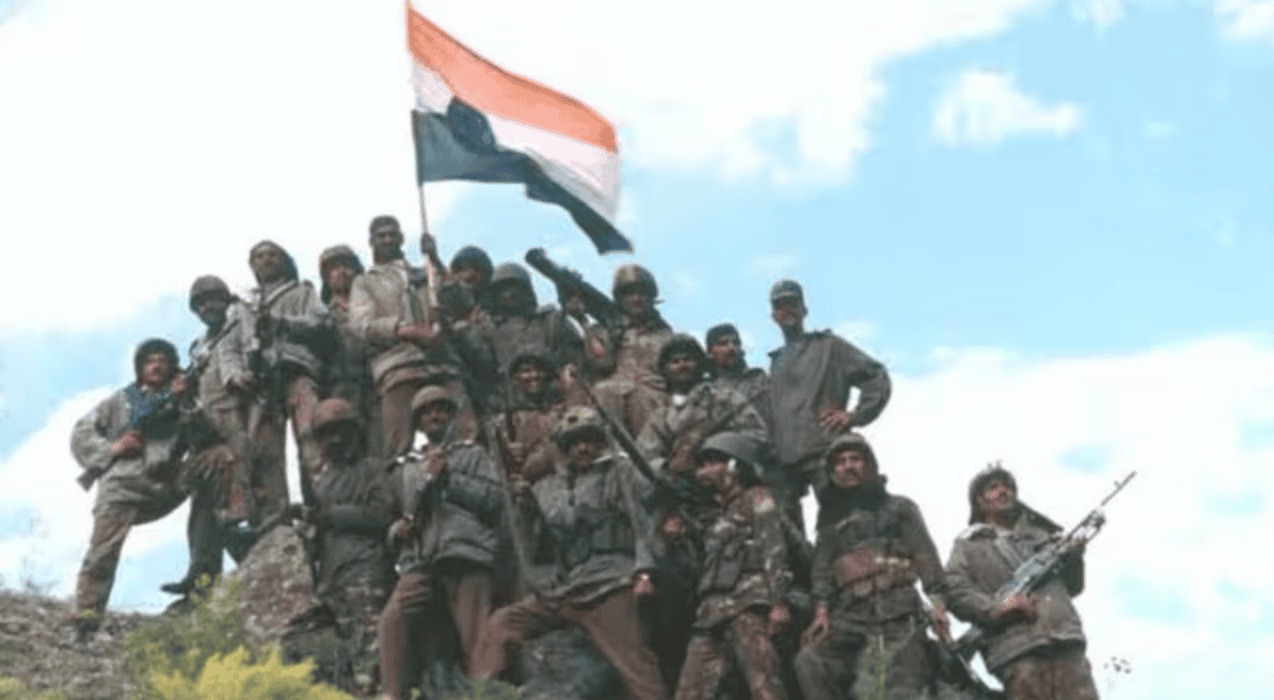
Key Highlights
- Kargil Vijay Diwas is celebrated every year on 26 July to mark India's victory in the Kargil War (1999).
- It commemorates the success of Operation Vijay, launched to reclaim Indian territory from Pakistani intruders.
- Brave soldiers like Captain Vikram Batra (PVC) and Grenadier Yogendra Singh Yadav (PVC) are remembered for their gallantry.
- The war lasted from May to July 1999 and took place in the high-altitude regions of Kargil, Dras, and Batalik.
- Ceremonies are held annually at the Dras War Memorial in Ladakh and across India to pay tribute to martyrs.
Introduction
When you hear the song “Rataan Lambiyan” or “Jai Hind Ki Senaa” from the film Shershaah, it isn’t just a melody—it becomes a memory. A tribute. A voice echoing from the snow-clad heights of Kargil, where Captain Vikram Batra and countless others immortalised their courage. With every line—“Tu banke mera humsafar, chali aayi ho…”—we’re reminded of the loved ones left behind, and the love for the motherland that pushed our soldiers forward.
Indian cinema has, time and again, attempted to capture this spirit. From LOC: Kargil (2003), a raw, ensemble portrayal of battlefield valour, to Shershaah (2021), which brought “Yeh Dil Maange More!” back into the nation’s collective conscience, these films do more than entertain—they educate and honour.
Who can forget the chilling lines from Shershaah, when Captain Batra says:
“Either I will come back after hoisting the tricolour, or I will come back wrapped in it. But I’ll be back.”
Or the camaraderie and loss in LOC: Kargil, where one soldier whispers:
“Woh toh shaheed ho gaya... lekin zinda hai hum sab ke dil mein.”
These reel narratives draw heavily from real stories—stories of grit, sacrifice, and love for Bharat Mata. And behind the cinematic drama lies a cold, hard truth: the Kargil War of 1999 was a real conflict, one that cost us 527 soldiers, injured over a thousand, and tested our armed forces in the harshest terrain imaginable.
As we mark another Kargil Vijay Diwas on 26 July, we go beyond the films and look at the war that inspired them. The war that gave us legends. The war that defined a generation’s understanding of courage.
History of Kargil Vijay Diwas
The Kargil War began in May 1999when Pakistani soldiers and militants infiltrated Indian territory across the Line of Control (LoC), occupying key positions in the Kargil sector. The Indian Army responded with Operation Vijay, launched to evict the infiltrators.
By 26 July 1999, the mission was declared successful as Indian soldiers regained control of the high-altitude outposts. The day has since been commemorated as Kargil Vijay Diwas to honour the martyrs and heroes of the war.
Timeline of the Kargil War
- May 1999: The Indian Army detects unusual activity and infiltration in the Kargil region.
- May–June 1999: Fierce battles at Tololing, Dras, and Tiger Hill.
- 4 July 1999: Indian troops recapture Tiger Hill.
- 14 July 1999: Indian PM announces successful military progress.
- 26 July 1999: Operation Vijay officially comes to an end. Indian forces fully reclaimed the territory.
Operation Vijay: Strategic Victory
Operation Vijay was the code name for India’s mission to clear the Kargil sector of infiltrators. Launched in May 1999, the operation involved coordinated strikes by the Indian Army and Air Force under extreme weather conditions. Despite facing steep cliffs, freezing temperatures, and a well-entrenched enemy, Indian troops prevailed and hoisted the tricolour atop reclaimed peaks.
Operation Vijay was the Indian Army’s well-coordinated mission to evict Pakistani intruders. It involved mountain warfare in some of the most challenging conditions in the world, with altitudes exceeding 18,000 feet and temperatures as low as -10°C.
The operation utilised Bofors artillery, MiG-21s, Mirage 2000s, and elite infantry regiments. Over 500 Indian soldiers laid down their lives in this operation.
Kargil War Memorial in Dras
Located at the base of the Tololing Hill, the Kargil War Memorial is a tribute to India’s martyrs. Built by the Indian Army, it displays the names of every soldier who laid down his life in the war. Every year, military personnel, citizens, and families of the fallen gather here to pay homage.
Kargil War Heroes
Some of the war’s most celebrated soldiers include:
- Captain Vikram Batra (PVC): Known for his courage at Point 4875 and the iconic line “Yeh Dil Maange More!”
- Lieutenant Manoj Kumar Pandey (PVC): Led his platoon fearlessly through enemy fire.
- Grenadier Yogendra Singh Yadav (PVC): Scaled vertical cliffs and continued fighting despite injuries.
- Rifleman Sanjay Kumar (PVC): Took on enemy bunkers alone, neutralising threats.
- Major Rajesh Singh Adhikari: Led brave charges, sacrificing his life in the line of duty.
How India Pays Tribute
- The Dras War Memorial hosts the official ceremony, attended by military and civilian dignitaries.
- Prime Minister and Armed Forces Chiefs Pay Homage to the Fallen.
- Schools and colleges hold patriotic events, poster-making competitions, and lectures.
- Media houses and citizens across the nation share tributes on social platforms.
Quotes & Songs from the War & Films
“Either I will come back hoisting the tricolour or I will come back wrapped in it.” – Capt. Vikram Batra
“Yeh Dil Maange More!” – Capt. Batra’s war cry, now a symbol of courage
“Woh toh shaheed ho gaya… lekin zinda hai hum sab ke dil mein.” – LOC: Kargil
From Shershaah:
“Jai Hind Ki Senaa”, “Rataan Lambiyan” and “Raataan Lambiyan teri yaadon mein…” evoke deep emotion, blending reel and real.
Interesting Facts about the Kargil War
- The war occurred at altitudes of 16,000 feet in extreme weather conditions.
- India lost 527 soldiers, with over 1,300 injured.
- It was India’s first fully televised war, bringing live updates to homes.
- Over 70% of the intruded territory was reclaimed within weeks of combat.
- The international community supported India, isolating Pakistan diplomatically.
Conclusion: A Legacy Etched in Stone
Kargil Vijay Diwas is a day of remembrance, gratitude, and national pride. It stands as a reminder of what our soldiers endure to protect our freedom and how their sacrifices can never be repaid—only honoured. As the tricolour flies high over Tiger Hill and Tololing, so does the spirit of India.
Let us salute the brave, remember the fallen, and carry forward the legacy of courage.
FAQs
1. Why is Kargil Vijay Diwas observed on 26 July?
On 26 July 1999, India officially declared the successful completion of Operation Vijay, having reclaimed all the strategic peaks in the Kargil region from enemy occupation. It marks the end of the conflict and honours the sacrifices made by our soldiers.
2. What led to the Kargil War?
The war was triggered by Pakistani soldiers and militants infiltrating Indian territory and occupying vantage points in the Kargil sector. India responded with full military force to evict the intruders and restore the sanctity of the Line of Control (LoC).
3. How long did the Kargil War last?
The war lasted for around 60 days, from early May to 26 July 1999. It was a high-altitude conflict that tested the limits of endurance, planning, and logistics.
4. Who won the Kargil War?
India won the Kargil War. By the end of July 1999, Indian forces had recaptured all the posts infiltrated by Pakistani troops. The international community backed India, and Pakistan faced diplomatic backlash.
5. What is Operation Vijay?
Operation Vijay was the codename for the Indian Army’s mission to drive out infiltrators from Indian territory in Kargil. It was one of the most successful military operations in independent India’s history.
6. Who are the Param Vir Chakra awardees from the Kargil War?
Four soldiers received the Param Vir Chakra for exceptional bravery:
- Captain Vikram Batra
- Lieutenant Manoj Kumar Pandey
- Grenadier Yogendra Singh Yadav
- Rifleman Sanjay Kumar
7. Where is the Kargil War Memorial?
Located in Dras, Ladakh, the Kargil War Memorial commemorates the heroes of the 1999 conflict. It features names of martyrs etched in stone and stands in the shadow of the peaks they died recapturing.
8. How is the day celebrated in schools and colleges?
Educational institutions celebrate the day with:
- Speeches, skits, and patriotic songs
- Drawing/poster competitions
- Awareness programs about India’s defence history
9. What were the major battles of the Kargil War?
Key operations include:
- Battle of Tololing
- Capture of Tiger Hill
- Point 4875 (later named Batra Top)
Each involved close combat and steep mountain warfare.
10. How many Indian soldiers died in the Kargil War?
India lost 527 soldiers, with over 1,300 wounded. Their bravery is remembered each year with wreath-laying ceremonies and national tributes.
11. What caused the Kargil War?
The war was caused by the infiltration of Pakistani soldiers and militants across the LoC into Indian territory in Kargil, aiming to sever Ladakh from Kashmir.
12. Which countries supported India during the Kargil War?
India gained diplomatic support from the United States, France, and Russia, especially as Pakistan was seen as the aggressor.
13. What was the role of the Indian Air Force in the Kargil War?
Under Operation Safed Sagar, the IAF provided air strikes and logistical support, proving crucial to India’s success.
Related Articles
The India-Pakistan War of 1971 was a turning point in South Asian history. India’s military action and humanitarian leadership led to the liberation of Bangladesh and redefined regional security.
Vijay Diwas commemorates India’s historic victory in the India-Pakistan War of 1971. The war led to the creation of Bangladesh and showcased India’s leadership on land, air, and sea.
Indian Navy Day 2025 celebrates the courage and discipline of India’s sea warriors. This guide covers the theme, history, Operation Trident, key missions and achievements of the Navy.
The 26 November Mumbai attacks were a major terror strike that tested India’s security forces. This guide explains the full timeline, police and armed forces response, casualties, operations and facts that many people do not know.



Related Post
The India-Pakistan War of 1971 was a turning point in South Asian history. India’s military action and humanitarian leadership led to the liberation of Bangladesh and redefined regional security.
Vijay Diwas commemorates India’s historic victory in the India-Pakistan War of 1971. The war led to the creation of Bangladesh and showcased India’s leadership on land, air, and sea.
Indian Navy Day 2025 celebrates the courage and discipline of India’s sea warriors. This guide covers the theme, history, Operation Trident, key missions and achievements of the Navy.
The 26 November Mumbai attacks were a major terror strike that tested India’s security forces. This guide explains the full timeline, police and armed forces response, casualties, operations and facts that many people do not know.