
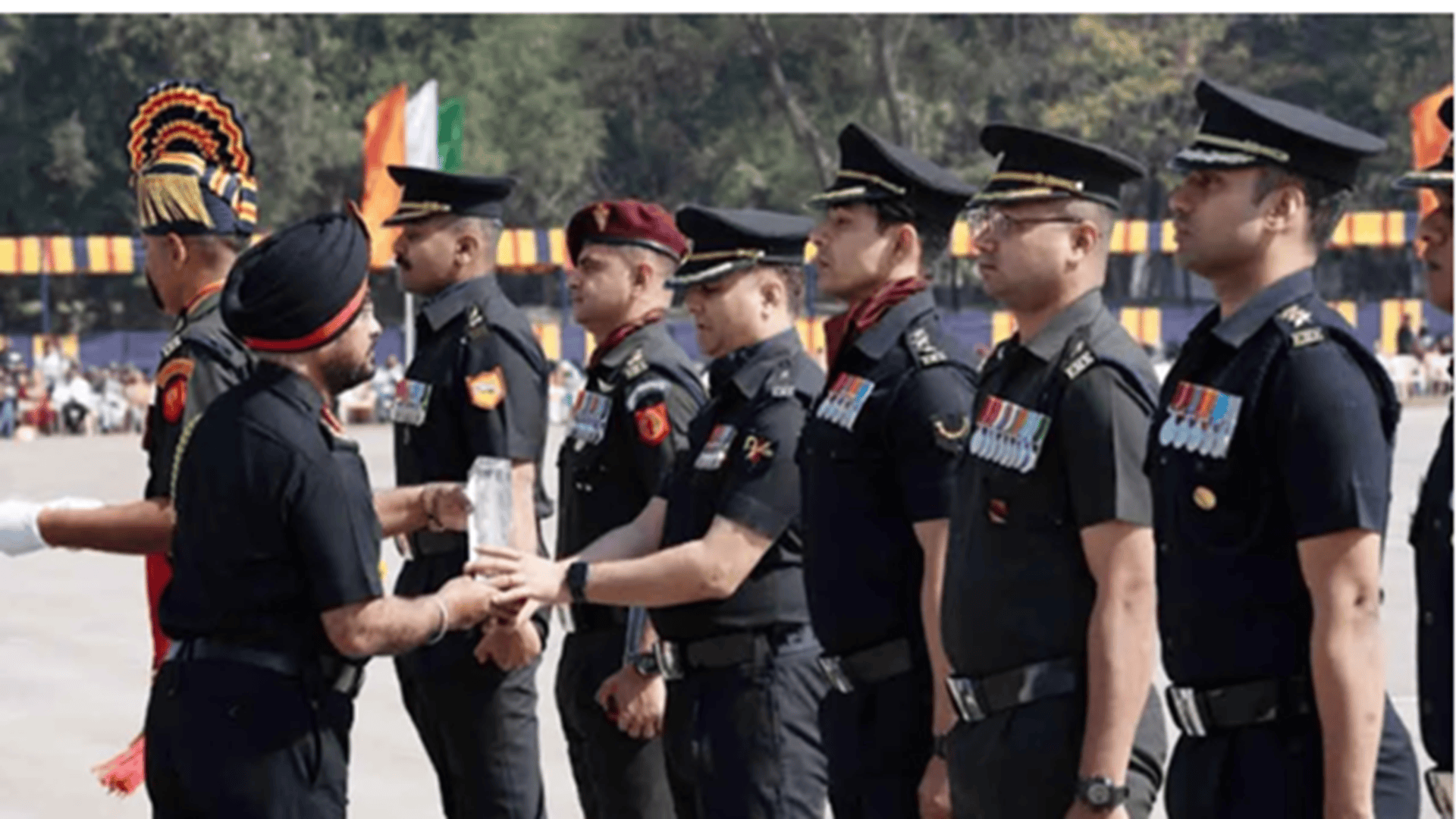
EME Corps Day 2025: Honouring the Tech Backbone of the Indian Army

In this article
Key Highlights
- Celebrates the 78th EME Corps Day — honouring India’s Army engineers.
- Showcases the Corps’ evolution from World War II maintenance to AI-led innovation.
- Recognises EME’s contributions to India’s defence self-reliance and modernisation.
- Highlights the Corps’ global missions, sustainability goals, and women’s inclusion.
- Reinforces udChalo’s commitment to empowering defence personnel through travel, housing, and financial support.
Introduction
Every year on October 15, the Indian Army commemorates EME Corps Day, celebrating the Corps of Electronics and Mechanical Engineers (EME) — the technical warriors who keep India’s defence machinery moving.
Since its inception in 1943, the EME has played a crucial role in maintaining, repairing, and modernising the Army’s equipment, vehicles, and weapon systems across all terrains and operations. Whether it’s a tank on the battlefield, a radar in high-altitude areas, or an advanced communication system, the EME ensures everything runs smoothly.
This year marks the 78th EME Corps Day, a tribute to the Army’s technical backbone — a unit that combines innovation, precision, and resilience in service of the nation.
Significance of EME Corps Day
EME Corps Day symbolises more than just a date of establishment. It celebrates India’s journey from mechanical maintenance to digital warfare readiness. The Corps represents the perfect blend of technology, discipline, and teamwork, ensuring that soldiers always operate with confidence in their equipment.
Each year, the celebrations feature parades, exhibitions, and awards recognising exceptional engineers and innovations that support the Army’s modernisation drive. It’s a moment to reflect on decades of progress — from early mechanical workshops to cutting-edge repair depots integrating AI-based predictive maintenance, 3D printing, and automation.
History of the EME Corps
The Corps of Electronics and Mechanical Engineers (EME) was founded on 15 October 1943 as the Corps of Indian Electrical and Mechanical Engineers (IEME) during World War II. The formation aimed to unify all maintenance and repair functions under one specialised technical corps to meet wartime demands.
After India’s Independence in 1947, the Corps was renamed EME, reflecting the inclusion of electronics, signals, and communications in its responsibilities.
Key Milestones in EME’s Evolution
- 1943: Formation of IEME to centralise engineering maintenance.
- 1947–1965: Post-independence expansion; creation of Base and Field Workshops.
- 1971–1999: Active support during major conflicts, including the 1971 Indo-Pak War and Kargil operations.
- 2000–Present: Transition to digital diagnostics, robotics, and data-driven maintenance systems.
The EME has since become the Indian Army’s innovation hub, pioneering advances in electronics integration, indigenous vehicle modification, and automated repair systems.
Its motto, “Sahasam Vijayate” (Courage Triumphs), reflects the courage to innovate and excel under any conditions — in the field or in the lab.
The Role of EME in Modern Warfare
In today’s era of smart warfare, the EME’s role has expanded far beyond traditional repairs. It now forms the technical core of India’s mission-readiness ecosystem, ensuring operational reliability through advanced engineering solutions.
Core Responsibilities:
- Maintenance and repair: Ensuring all Army vehicles, weapons, and electronic systems remain combat-ready.
- Field recovery operations: Conducting high-risk retrievals of damaged vehicles and equipment during operations.
- Lifecycle management: Overseeing inspection, servicing, and upgrades for mission-critical assets.
- Innovation and R&D: Collaborating with DRDO, BEL, and HAL to develop indigenous solutions aligned with Atmanirbhar Bharat.
- Training and upskilling: Through the EME Centre in Secunderabad, training thousands of officers and soldiers in advanced tech disciplines.
Technological Advancements:
- AI-based predictive maintenance reduces downtime and improves mission reliability.
- 3D printing and robotics are now used in field-level component fabrication.
- Data analytics and IoT systems help forecast failures and improve asset utilization.
- Indigenous simulators and virtual training have revolutionized how technical soldiers are prepared for real-world scenarios.
Through these innovations, EME has become synonymous with tech-enabled defence excellence.
Lesser-Known Facts About the EME Corps
- First to adopt digital maintenance systems: The EME introduced computerised tracking for vehicle and equipment maintenance as early as the 1990s.
- Women engineers in the Corps: EME has been a pioneer in inducting women officers in technical and field roles.
- Global recognition: EME officers have represented India in multiple UN Peacekeeping Missions, providing engineering and communication support across continents.
- Sustainability initiatives: The Corps focuses on green workshops, reducing waste and energy consumption in repair depots.
- Symbolism: The EME insignia — a lightning bolt and gear wheel — symbolises speed, precision, and power in action.
The Human Side of EME: Courage and Commitment
Behind every EME badge is a story of dedication. Technicians and engineers often operate in extreme conditions — deserts, mountains, or forward posts — where equipment failure can mean mission failure.
Their quick thinking and resourcefulness make the difference between victory and vulnerability. Whether it’s repairing tanks in sub-zero conditions or restoring communications after a landslide, the EME demonstrates that engineering excellence is also a form of bravery.
How udChalo Supports Defence Personnel
At udChalo, we salute the EME’s indomitable spirit and proudly stand beside India’s defence community. Our mission is to make everyday life simpler for Armed Forces personnel and their families through seamless access to travel, housing, and essential services.
Our Key Offerings for Defence Personnel:
- Defence Travel Bookings: Exclusive flight discounts for serving and retired personnel, ensuring hassle-free travel for duty, leave, or postings.
- udChalo Housing: Premium, defence-friendly housing projects with bank loan assistance and ready-to-move plots.
- Financial Services: Easy EMI, insurance, and financial planning options designed for servicemen.
- Education & Employment Support: udChalo provides opportunities for veterans and dependents through skill-building and job placements.
From booking a flight home to buying a house near a cantonment, udChalo simplifies life beyond duty — because the people who protect the nation deserve nothing less than convenience and respect.
Future of the EME Corps
As India moves toward defence digitalisation and indigenisation, the EME will continue to play a pivotal role. The Corps is already exploring:
- AI-assisted combat maintenance systems.
- Electric mobility solutions for military logistics.
- Smart monitoring tools for predictive repair cycles.
- Collaborations with Indian startups to accelerate innovation.
With every new advancement, the Corps ensures that India’s forces remain mission-ready, future-ready, and technologically superior.
Related Articles
The India-Pakistan War of 1971 was a turning point in South Asian history. India’s military action and humanitarian leadership led to the liberation of Bangladesh and redefined regional security.
Vijay Diwas commemorates India’s historic victory in the India-Pakistan War of 1971. The war led to the creation of Bangladesh and showcased India’s leadership on land, air, and sea.

Indian Navy Day 2025 celebrates the courage and discipline of India’s sea warriors. This guide covers the theme, history, Operation Trident, key missions and achievements of the Navy.
The 26 November Mumbai attacks were a major terror strike that tested India’s security forces. This guide explains the full timeline, police and armed forces response, casualties, operations and facts that many people do not know.



Frequent Asked Questions

Related Post
The India-Pakistan War of 1971 was a turning point in South Asian history. India’s military action and humanitarian leadership led to the liberation of Bangladesh and redefined regional security.
Vijay Diwas commemorates India’s historic victory in the India-Pakistan War of 1971. The war led to the creation of Bangladesh and showcased India’s leadership on land, air, and sea.
Indian Navy Day 2025 celebrates the courage and discipline of India’s sea warriors. This guide covers the theme, history, Operation Trident, key missions and achievements of the Navy.
The 26 November Mumbai attacks were a major terror strike that tested India’s security forces. This guide explains the full timeline, police and armed forces response, casualties, operations and facts that many people do not know.